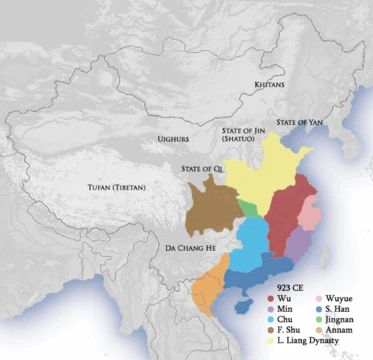
Jin dynasty (1115–1234)

It emerged from Wanyan Aguda's rebellion against the Liao dynasty and at its peak extended from Outer Manchuria to the Qinling–Huaihe Line. The Jin is significant for conquering northern China, adapting to Han customs, and for being referred to by the Mongols as the 'Golden khan'—a name that later reached Europe.
- known_for
- Conquest of Liao and northern Song; revival of Confucianism; known in Europe through the Mongol epithet 'Golden khan'
Lore & Background
The Jin dynasty was founded by Wanyan Aguda after his rebellion against the Liao dynasty, which had dominated northern China. Over time, Jin emperors adapted to Han customs and constructed defensive lines—sometimes called the 'Jin frontier fortifications'—against the rising Mongol Empire, though these were not the Great Wall as commonly understood. The Jin also oversaw cultural advances, including the revival of Confucianism. The name 'Jin' means 'gold' in Chinese, derived from the Jurchen word 'alchun.' The dynasty officially called itself the 'Great Jin.' The Mongols referred to its ruler as the 'Golden khan' (Altan khan), and through them, the Jin became known in Europe by that epithet—though it is not clearly the first Chinese dynasty known in Europe by its dynastic name. The Jin emperors also referred to their state as 'China' (Zhongguo), expanding the definition to include non-Han peoples. The origin of the Wanyan surname for the imperial family is debated among scholars; while some propose a Sino-Khitan compound meaning 'kingly' or 'royal,' no single etymology is widely accepted. The Jurchen people emerged from the Heishui Mohe, a Tungusic group in what is now Northeast China, and were vassals of the Liao before rising under Wanyan leadership.
Reader's Guide
The Jin dynasty's significance lies in its role as a Jurchen-led empire that successfully challenged and replaced the Liao dynasty, then fought the Song for control of northern China. It represents a key example of a non-Han dynasty that adopted Chinese administrative and cultural practices while maintaining its own identity. The Jin's use of the name 'China' for itself and its choice of earth as its dynastic element (following the Song's fire) show a deliberate claim to legitimate rule over Chinese territory. The dynasty's internal cultural advances, such as the revival of Confucianism, contributed to its legacy. However, the Jin ultimately fell to the Mongol Empire after a 23-year struggle marked by defeats, revolts, and defections. The Jin is also notable for being the first Chinese dynasty to be known in Europe by its dynastic name, transmitted through Mongol intermediaries.
Did You Know?
- The Jin dynasty was officially called the 'Great Jin' (大金), with 'Jin' meaning 'gold'.
- The Mongols called the Jin ruler the 'Golden khan' (Altan khan), and through them the Jin became known in Europe by that epithet—though it is not clearly the first Chinese dynasty known in Europe by its dynastic name.
- The Jin emperors referred to their state as 'China' (Zhongguo), expanding the definition to include non-Han peoples.
- The etymology of the Wanyan surname is debated; no single origin, such as a Sino-Khitan compound, is widely accepted in mainstream scholarship.
Frequently Asked Questions
What are Jin dynasty (1115–1234)'s powers/role?
At its zenith the realm stretched from Outer Manchuria southward to the Qinling–Huaihe Line, a territory secured through the conquest of both the Liao and the northern Song.
Why is Jin dynasty (1115–1234) important?
It reorganized northern China's political order, fostered a Confucian cultural revival, and left a lasting linguistic trace in Europe through the Mongol epithet 'Golden khan.'
Why is Jin dynasty (1115–1234) sometimes called 'Golden'?
The Mongols dubbed the Jurchen rulers the 'Golden khan,' and that nickname is how the dynasty's name reached medieval European sources.
More in Dynasties And Kingdoms 1-19
Spotted an error? Know more?
This is a living reference — every entry is fact-audited, and reader corrections feed straight into our audit queue. Suggest an edit · See this site's audit record